Published on June 3, 2026
How to Protect Interior Doors from Termites and Damage?
1. Introduction
Interior doors are an essential part of any home or commercial space, but over time they can become vulnerable to issues that affect both their appearance and performance. Among the most common problems are termite infestations and wood deterioration caused by moisture and environmental conditions. These issues do not only impact the visual appeal of interior doors; they can also weaken the door structure, reduce durability, and shorten its lifespan. Without early prevention and proper maintenance, damage may lead to costly repairs or complete replacement. Understanding the causes and applying protective measures at an early stage is the key to maintaining long-lasting and durable interior doors.
2. Causes of Damage and Infestation
Termite problems and interior door damage usually occur due to several contributing factors that directly affect wood quality and stability, including:
- High humidity levels inside the home or around walls and flooring
- Using untreated or low-quality wood materials
- Water leaks near doors, walls, or flooring areas
- Poor ventilation that creates an environment suitable for insects and moisture buildup
- Lack of regular maintenance and inspections
Identifying these causes early can help prevent serious structural damage and reduce long-term maintenance costs.
3. Prevention Methods
The risk of termite infestation and door deterioration can be significantly reduced by following practical preventive measures:
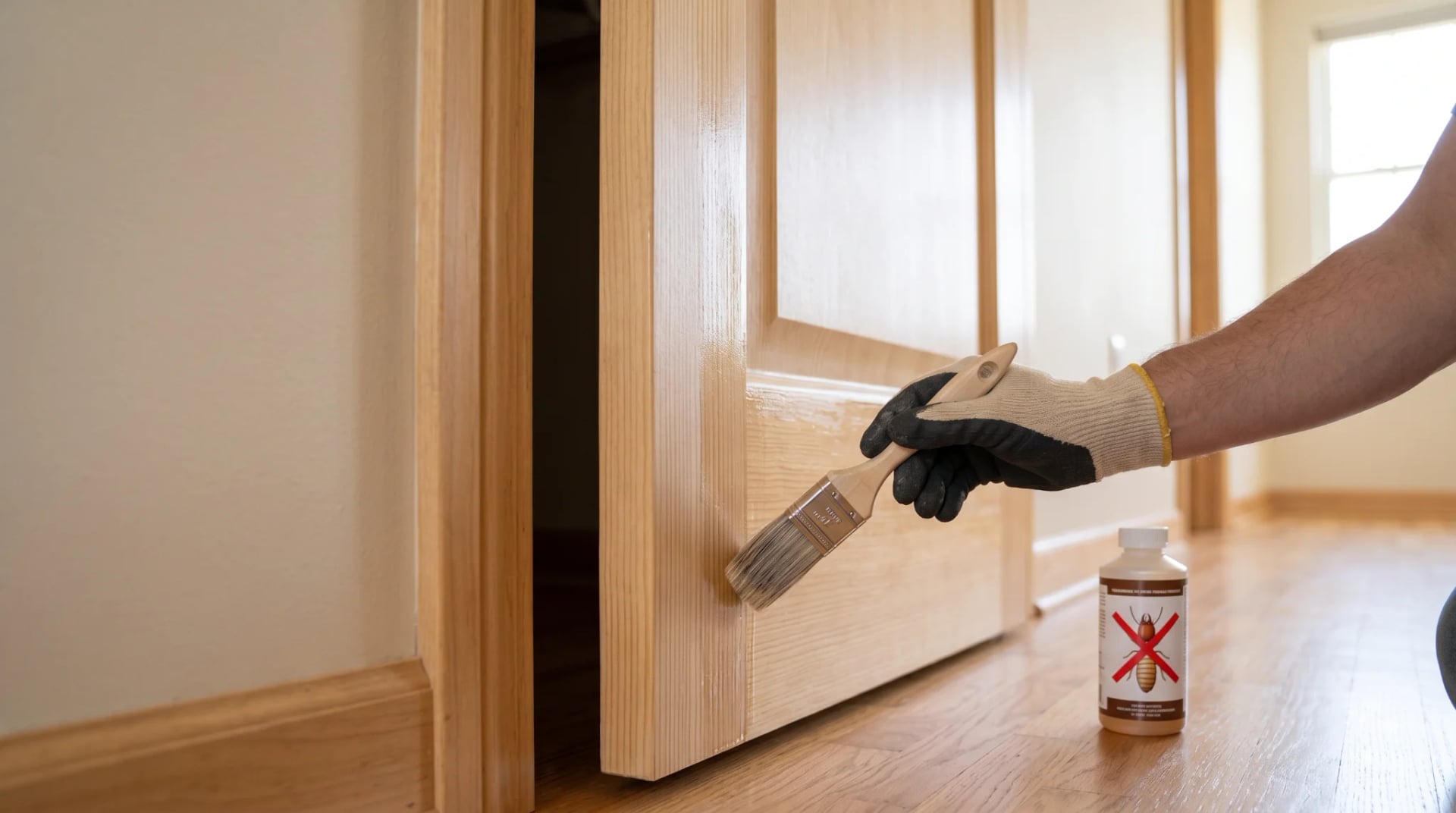
- Use termite-resistant or chemically treated materials before installation
- Apply moisture-resistant protective coatings and finishes to the door surface
- Treat installation areas with preventive pest-control solutions
- Avoid installing interior doors in high-moisture environments without proper preparation
- Select durable, high-quality materials designed to withstand environmental changes
Implementing these preventive practices helps preserve the quality, appearance, and functionality of interior doors over time.
4. Regular Maintenance Methods
Routine maintenance plays an important role in extending the lifespan of interior doors and detecting problems before they become severe. Key maintenance practices include:
- Clean doors regularly to prevent moisture and dirt accumulation
- Inspect corners and edges for early signs of termite activity or insect damage
- Reapply protective coatings or finishes when necessary
- Repair cracks, gaps, or visible damage as soon as they appear
- Check surrounding areas for water leaks or moisture-related issues
Consistent maintenance reduces repair costs and helps maintain the strength and appearance of interior doors for many years.
5. Long-Term Protection (The Importance of WPC)
For homeowners and businesses looking for stronger protection and lower maintenance requirements, WPC (Wood Plastic Composite) has become a highly practical alternative to traditional wooden doors.
- Highly resistant to termites and insects because it does not contain natural wood fibers that pests feed on
- Excellent moisture and water resistance with minimal expansion or deformation
- Longer lifespan compared to conventional wooden doors
- Requires less maintenance, reducing long-term costs
- Better stability and durability in humid and challenging environments
For this reason, WPC interior doors are considered a long-term solution for anyone seeking durability, termite resistance, reduced maintenance, and better overall performance. They are particularly beneficial in humid environments or areas with a higher risk of insect-related damage.