Published on May 31, 2026
Why Do Wooden Doors Swell Because of Humidity? Causes and Effective Solutions
1. Introduction
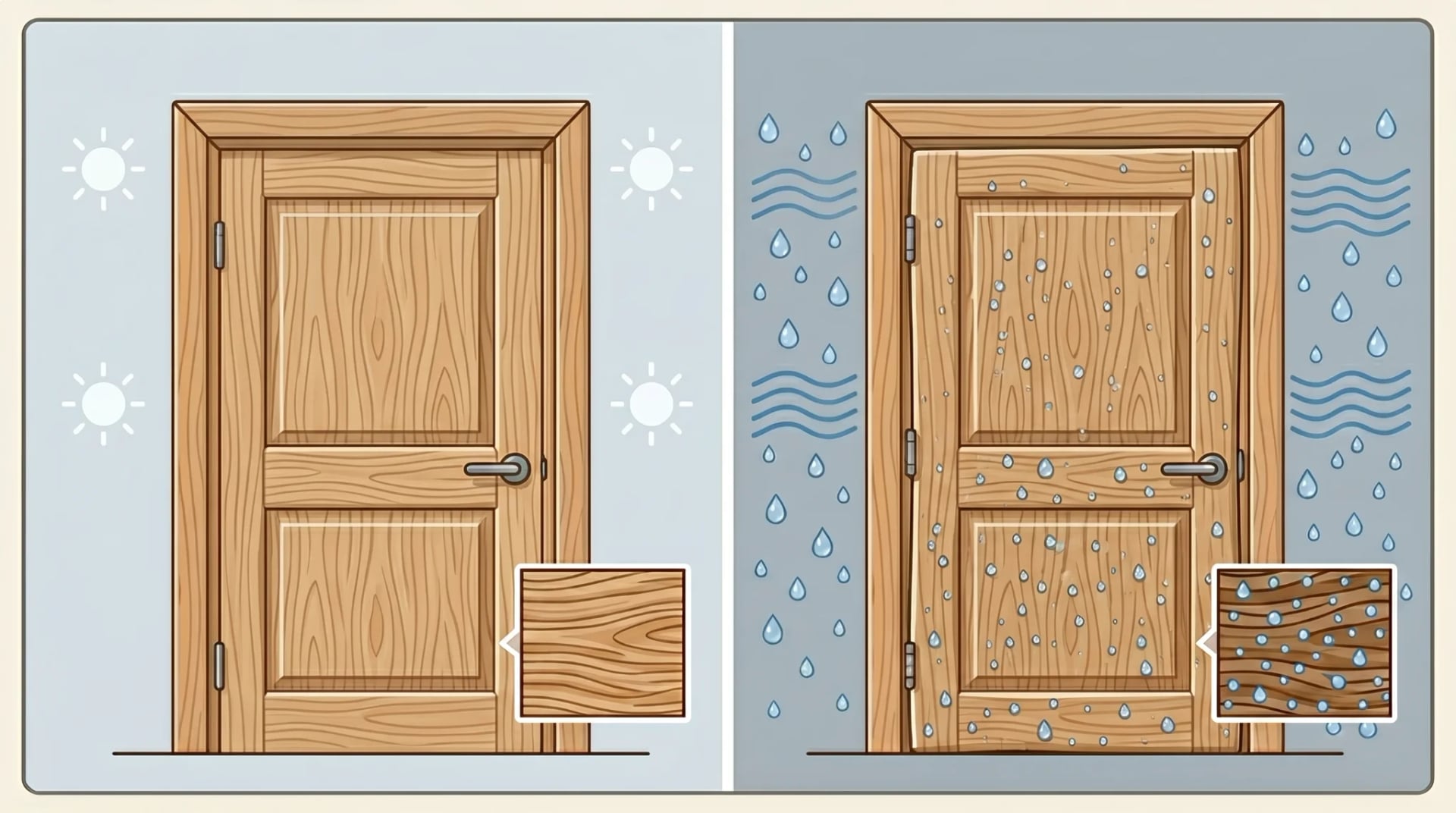
Wooden door swelling is one of the most common issues homeowners face, especially in areas with high humidity levels or frequent temperature changes. Many people notice that a door becomes difficult to open or close, starts rubbing against the frame, or feels heavier than usual. While some may assume this is a manufacturing defect, the problem is often caused by the natural reaction of wood to environmental conditions.
Wood is a natural material that continuously interacts with moisture and temperature in the surrounding environment. As a result, its dimensions can change over time, leading to expansion, contraction, and other visible effects.
2. Why Wood Absorbs Moisture
Wood is an organic material made up of tiny pores and fibers that allow it to react to surrounding air conditions. When humidity levels rise, wood absorbs moisture from the air, causing the fibers inside the material to expand.
On the other hand, in dry environments, wood gradually releases moisture and shrinks. This natural cycle of expansion and contraction is the primary reason wooden doors change shape and size over time.
The issue becomes more noticeable in humid regions, coastal environments, and areas with poor ventilation such as bathrooms, kitchens, and laundry spaces.
3. Effects of Humidity on Wooden Doors
When wooden doors are exposed to moisture for extended periods, several issues can appear that affect both functionality and appearance:
- Wood swelling: Increased door size can make opening and closing difficult.
- Surface cracking: Moisture imbalance inside the wood can lead to cracks over time.
- Damage to the outer layer: Paint, coating, or veneer may peel or deteriorate, reducing protection against moisture.
- Reduced lifespan: Continuous moisture exposure can gradually weaken the structure of the door.
Without proper treatment, repeated exposure to humidity may cause these issues to worsen over time.
4. How to Prevent Wooden Door Swelling
You can significantly reduce the risk of wooden door swelling by following a few practical preventive measures:
- Apply protective coatings: Paints and sealants help reduce moisture absorption and create an additional protective layer.
- Improve insulation: This is particularly important for exterior doors or doors near kitchens and bathrooms.
- Maintain proper ventilation: Reducing indoor humidity helps stabilize wood dimensions.
- Perform regular maintenance: Repainting and repairing small cracks early can prevent larger problems later.
- Control indoor moisture sources: Repair leaks and consider using dehumidifiers in highly humid environments.
Following these practices consistently helps preserve the appearance and durability of wooden doors.
5. Better Alternatives
In some situations, choosing alternatives to natural wood may be more practical, especially in environments with consistently high humidity.
One common option is WPC (Wood Plastic Composite), a material that combines wood fibers with plastic components. WPC offers several advantages, including:
- Higher resistance to moisture and water
- Greater dimensional stability than natural wood
- Reduced risk of swelling and cracking
- Lower maintenance requirements
- A finish that closely resembles natural wood
Because of these benefits, WPC doors have become increasingly popular in residential and commercial projects, particularly in moisture-prone environments.
Conclusion
Wooden door swelling is usually not a random issue or a manufacturing defect. In most cases, it is a natural result of wood absorbing moisture and reacting to environmental conditions. Understanding why wooden doors swell and knowing how humidity affects wood can help homeowners choose the right solution, whether through preventive maintenance, proper moisture control, or selecting more moisture-resistant materials such as WPC.
Taking the right approach early can improve door performance, extend lifespan, and reduce long-term maintenance costs.